
Read ArticleRead ArticleDiscussion - Centaflex A Type 0 and Type 0–S – What Is the Difference? When selecting or...
Explore practical CENTAFLEX A coupling guides created for maintenance teams, engineers, equipment owners and spare-parts buyers. This technical knowledge section explains how to identify an installed CENTAFLEX A element, read its markings, compare mounting types, confirm Shore hardness and select the correct original replacement.
The articles in this category focus on real identification, inspection and maintenance questions. They help explain why two CENTAFLEX A elements that appear similar may still differ by size, fitment type, elastomer hardness, material specification or intended drivetrain application.
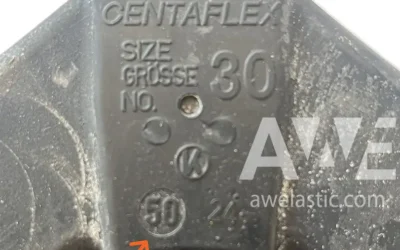
Correct CENTAFLEX A identification normally begins with the markings moulded or stamped into the existing elastic element. Important information can include the coupling size, type designation, Shore hardness and other production or identification codes.
Start with our CENTAFLEX A coupling identification guide to learn which markings are relevant and what additional information should be collected when the complete product code is no longer visible.
Before requesting a replacement, record:
A visual match alone is not sufficient. The complete identification should be confirmed before the element is ordered or installed.
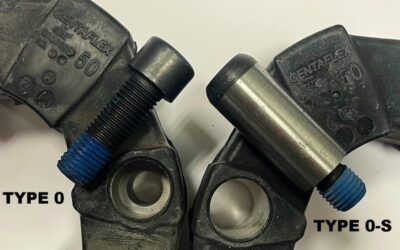
CENTAFLEX A elements are available in different mounting executions. Two of the most commonly encountered versions are Type 0 and Type 0-S.
Although both versions belong to the same coupling family, their attachment and axial movement arrangements differ. This means that an element of the correct size and Shore hardness can still be unsuitable when the wrong fitment type is selected.
Read the complete CENTAFLEX A Type 0 and Type 0-S comparison before replacing an element when the original mounting arrangement is uncertain.
When identifying the fitment type, inspect:
Shore A hardness describes the stiffness of the coupling’s elastomer. It affects torsional flexibility, damping behaviour and the dynamic response of the complete drivetrain.
Elements with the same dimensions may be available in different Shore hardness versions. They should not be treated as interchangeable merely because they fit into the same physical space.
Use our guide to understand Shore hardness in CENTAFLEX A couplings and why the replacement should normally match the value specified for the original drivetrain.
Before selecting an element, check:
Changing the Shore hardness without technical confirmation can alter the torsional characteristics of the coupling system.
An original CENTAFLEX A replacement is manufactured for the dimensions, elastomer characteristics, fitment and operating requirements of the corresponding coupling system.
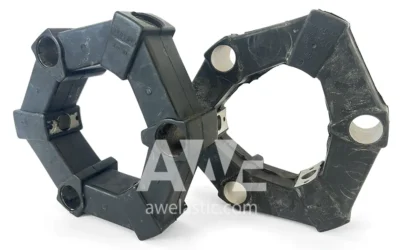
Aftermarket elements can imitate the general appearance of the original component while differing in rubber quality, Shore hardness accuracy, production traceability or long-term ageing behaviour.
Read CENTAFLEX original couplings versus copies to learn which markings, production details and physical characteristics can help distinguish a genuine element from an unverified alternative.
When inspecting an element, look for:
Original identification markings should still be considered together with the complete product code. A single logo, patent number or visual feature may not confirm the exact replacement size and execution.
Older and current CENTAFLEX A elements may carry markings such as D.B.P. 2019608 and JAP.Pat. 778322. These numbers can help indicate the CENTAFLEX A coupling family, but they do not identify the complete size, fitment type or Shore hardness by themselves.
Read our explanation of D.B.P. 2019608 and JAP.Pat. 778322 markings to understand what these numbers mean and which additional information must still be located on the element.
If these patent references are the only readable markings, continue inspecting the complete circumference and both sides of the element for the actual size and type code.
The correct CENTAFLEX A replacement should match the complete technical specification of the installed component.
Confirm all of the following before ordering:
The equipment model can help narrow the search, but it should not replace the original coupling code. Machines from the same product family can use different engine, flywheel, hub or coupling configurations.
A CENTAFLEX A element should be inspected when the machine develops unusual vibration, increased drivetrain noise, irregular torque transmission or visible movement within the coupling assembly.
Common signs of wear include:
The cause of premature damage should be investigated before installing a new element. Repeated failure can be associated with drivetrain misalignment, damaged hubs, loose mountings, incorrect Shore hardness or operating conditions outside the original specification.
Do not inspect only the rubber element. Check the complete coupling assembly, including the matching hubs, flanges, guide pins, bolts, fasteners and connected machine mountings.
A new element can be damaged prematurely when installed with worn or incorrectly aligned components. Inspect the connection for excessive clearance, damaged threads, worn pins, loose bolts or movement between the engine and driven equipment.
Installation procedures and tightening values should follow the appropriate technical documentation for the coupling size and machine application.
Technical documentation can help confirm dimensions, available sizes, fitment designs, torque capacity, operating speed and installation requirements.
Visit the CENTAFLEX A catalogue and technical downloads page to access available product information before selecting or installing a replacement element.
Technical data should always be interpreted together with the original machine specification. Selecting a coupling only from a general torque value or outside diameter may overlook important drivetrain requirements.
Browse the complete range of original CENTAFLEX A coupling elements by size, fitment type and Shore hardness.
The product catalogue includes individual Type 0 and Type 0-S elements in different sizes and specifications. Open the relevant product page and compare its complete code with the marking on the existing component.
If the required element cannot be identified, send AWELASTIC the available coupling markings, dimensions, machine information and clear photographs.
Browse the articles in this category for step-by-step identification help, fitment explanations, Shore hardness guidance, wear inspection advice and practical information about choosing original CENTAFLEX A replacement elements.
Read ArticleRead ArticleDiscussion - Centaflex A Type 0 and Type 0–S – What Is the Difference? When selecting or...
Read ArticleRead ArticleDiscussion - Not all coupling elements are created equal. If you're replacing a worn Centaflex...
Read ArticleRead ArticleDiscussion - Understanding Shore Hardness in Centaflex A Couplings – Why Matching Matters When...