
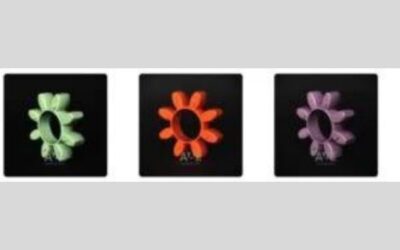
Visual Inspection: Shape: Size of the spider can be identified according to element shape from the picture below. Color: ROTEX spider elements come in three colors: Light green: Indicates a Spider 64 Shore D T-PUR® element
Explore practical KTR ROTEX spider guides for engineers, maintenance teams, equipment owners and spare-parts buyers. This technical knowledge section explains how to identify an installed ROTEX spider, determine its size, understand T-PUR colours and Shore hardness, inspect the complete coupling and select the correct original replacement element.
A ROTEX spider should not be selected only by its colour or approximate outside diameter. The nominal coupling size, elastomer hardness, element profile, connected hubs and complete drivetrain requirements must all be considered before ordering.
The articles in this category focus on practical identification, inspection and replacement questions. Use them to collect the correct information and avoid installing an element with the wrong size, hardness or operating characteristics.
A KTR ROTEX spider is the flexible elastomer element installed between the two hubs of a ROTEX jaw coupling.
The complete coupling normally consists of:
During operation, the hub jaws compress the spider lobes and transmit torque through the elastomer. The element helps damp torsional vibration, absorb shock loads and compensate for permitted axial, radial and angular displacement within the complete coupling system.
ROTEX spiders are available in multiple nominal sizes and hardness grades. Components that appear visually similar may therefore have different dimensions, torque capacity, damping behaviour and intended applications.
Correct identification should begin with the markings and shape of the existing elastomer element.
Use the KTR ROTEX spider identification guide to compare element shapes, colours and dimensions.
Clean the complete element and inspect both faces, every lobe and the central opening. Dirt, grease, wear or deformation can conceal the size and hardness markings.
Look for:
Copy the complete marking exactly. Do not omit the hardness value or the letter A or D, because 64 Shore D is not the same measurement scale as 64 Shore A.
Before requesting a replacement KTR ROTEX spider, collect all available information from the existing coupling and the complete drivetrain.
Please provide:
The original size and hardness markings should be used as the primary identification reference whenever they remain readable. Measurements and photographs should provide additional confirmation.
The current AWELASTIC range groups original ROTEX spiders into five principal size ranges:
The nominal number identifies the ROTEX size but does not confirm the required hardness. The complete replacement specification must include both the element size and its Shore hardness.
ROTEX sizes 14, 19 and 24 are compact spider elements used in smaller electric-motor drives, pumps, gearboxes, compressors and other machinery requiring a compact shaft connection.
When identifying one of these elements, check:
A size 19 element should not be selected for a size 24 coupling simply because both spiders appear similar in a photograph.
ROTEX sizes 28, 38 and 42 are commonly used in medium-size industrial drives, hydraulic systems, pumps, compressors and gear units.
These sizes may be available in several hardness grades. The correct version should be selected according to the original drivetrain specification rather than colour availability or price.
Confirm the nominal size directly from the element or by comparing accurate dimensions with the appropriate KTR technical data.
ROTEX sizes 48, 55 and 65 are larger spider inserts used in higher-capacity motor, pump, compressor and gearbox drives.
As coupling size increases, correct inspection of the hub jaws becomes especially important. A worn or damaged hub can produce excessive clearance and quickly damage a new elastomer element.
Before ordering, verify:
ROTEX sizes 75, 90 and 100 are heavy-duty elements used in industrial pumps, compressors, gearboxes, generators and other continuous-duty drive systems.
Elements of these sizes should not be selected only from the machine power rating. Torque, operating speed, starting loads, hardness and the complete coupling configuration must also correspond with the original design.
Inspect the complete coupling carefully before installing a replacement because damaged jaws, incorrect hub spacing or drivetrain movement can significantly reduce the service life of a new spider.
The AWELASTIC catalogue also includes large ROTEX spiders for demanding industrial, power-generation, marine and heavy-machinery applications.
Current heavy-duty listings include:
For these large couplings, the original technical specification is essential. Confirm the exact size, Shore hardness, rated torque, operating speed and hub configuration before ordering.
Current KTR T-PUR spiders use a colour system that helps distinguish the standard hardness grades.
Colour is a useful first identification indicator, but it should be confirmed using the visible hardness marking. Age, contamination, heat and operating conditions can alter the appearance of the element.
The orange 92 Shore A T-PUR spider is commonly used as the standard element in many general industrial ROTEX applications.
It provides a balance between torsional flexibility, vibration damping and torque transmission. This does not mean that it is automatically correct for every ROTEX coupling.
Always retain the original hardness unless the complete drivetrain has been checked and a different element has been technically approved.
The lilac or purple 98 Shore A T-PUR element is stiffer than the 92 Shore A version.
It can be selected in applications requiring different torsional characteristics or greater torque capacity within the corresponding coupling size. Its reduced flexibility changes the dynamic behaviour of the coupling and connected drivetrain.
Do not replace an orange 92 Shore A element with a lilac 98 Shore A element only because both have the same dimensions.
The light-green 64 Shore D T-PUR spider is the stiffest of the three standard hardness options displayed in the AWELASTIC ROTEX range.
Because Shore D and Shore A are different hardness scales, the numerical values should not be compared directly as though they were measured on the same scale.
A 64 Shore D element should be used only where this hardness is specified for the selected coupling and drivetrain.
Older ROTEX spiders manufactured before the current T-PUR colour system can use different colours.
Typical old-to-new colour references include:
When replacing an older element, do not select the new component only from a faded colour. Confirm the original hardness, size and complete coupling specification.
The spider hardness influences the torsional stiffness, damping characteristics and torque behaviour of the complete ROTEX coupling.
Changing the element hardness can affect:
The hardest available element is not automatically the best choice. The correct spider is the size and hardness specified for the actual drive system.
The correct replacement should match the original element in all essential respects.
Confirm:
Do not assume compatibility from a generic cross-reference or a photograph alone. Compare the complete element and drivetrain specification.
A ROTEX spider operates between two jaw-type coupling hubs. Both hubs should be inspected whenever the elastomer is replaced.
Check the hubs for:
A new original spider can fail prematurely when installed between damaged, incorrectly spaced or misaligned hubs.
The axial distance between the two ROTEX hubs must correspond with the installation dimension specified for the selected coupling size.
If the hubs are positioned too close together, they can restrict the spider or create unwanted contact. If they are too far apart, the hub jaws may not engage the elastomer correctly.
Before operation, verify:
Inspect the spider when the machine develops unusual noise, increased vibration, rotational play or irregular torque transmission.
Typical signs of wear include:
The underlying cause of premature wear should be identified before installing the replacement element.
A damaged ROTEX spider does not always indicate normal ageing. Premature failure can be caused by a problem elsewhere in the drive system.
Possible causes include:
Repeated element failure should be investigated rather than corrected only by installing a harder spider.
Do not inspect only the visibly damaged elastomer. Check the complete shaft connection.
Inspect:
Follow the correct KTR operating and assembly instructions for the exact ROTEX type and size.
An original KTR ROTEX spider is manufactured for the specified dimensions, Shore hardness, material characteristics and coupling geometry.
A visually similar replacement can differ in:
These differences can affect fitment, drivetrain vibration and the service life of the complete coupling.
When inspecting an existing or replacement element, look for:
A similar colour or general spider shape alone does not confirm that an element is original or suitable for the installed coupling.
ROTEX jaw couplings are used across general mechanical engineering and industrial drive systems.
Typical applications include:
The application or machine model can help narrow the search, but it does not replace verification of the exact ROTEX size and hardness.
Browse the complete range of original KTR ROTEX spiders by nominal size, Shore hardness and T-PUR colour.
Individual product pages provide the complete element designation, photographs, availability and ordering information.
The WooCommerce product category is intended for comparing and purchasing actual ROTEX elements, while this post category provides identification, inspection and technical guidance.
Browse the main KTR coupling catalogue for ROTEX spiders, BoWex FLE-PA flanges, BoWex-ELASTIC elements, BoWex M sleeves and other original coupling components.
Each coupling family has its own construction, identification method and operating characteristics. ROTEX spiders should not be confused with BoWex polyamide sleeves or highly flexible BoWex-ELASTIC flange elements.
If the installed spider cannot be identified, send AWELASTIC the visible markings, colour, measurements, hub information, machinery details and clear photographs.
The articles in this post category provide practical assistance with ROTEX size identification, T-PUR colour recognition, Shore hardness selection, wear inspection and original replacement-element selection.
Visual Inspection: Shape: Size of the spider can be identified according to element shape from the picture below. Color: ROTEX spider elements come in three colors: Light green: Indicates a Spider 64 Shore D T-PUR® element