
Centaflex X coupling elements are easy to identify. The size of the coupling element is typically stamped or embossed on the element itself.
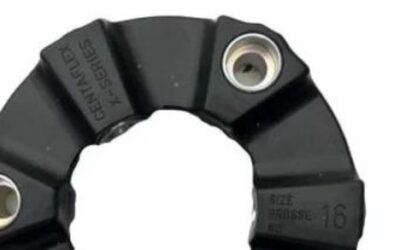
Explore practical CENTAFLEX X coupling guides created for maintenance teams, engineers, machine owners and spare-parts buyers. This technical knowledge section explains how to identify an installed CENTAFLEX X element, read its CF-X designation, confirm the coupling size and distinguish between Type 0 and Type 0-S components.
The articles in this category focus on practical identification, inspection and replacement questions. They explain which markings, dimensions, photographs and machine details should be collected before ordering a replacement coupling element.
CENTAFLEX X elements that share a similar external appearance may still differ by nominal size, design version, mounting arrangement and connection dimensions. The complete CF-X designation should therefore be confirmed rather than selecting a replacement only by shape or approximate diameter.
The first step is to inspect the complete coupling element for an embossed, moulded, stamped or printed product designation. The nominal CENTAFLEX X size is normally included directly in the CF-X marking.
Use the CENTAFLEX X coupling identification guide to see what information should be located on the existing element and which photographs can help when the marking is damaged or difficult to read.
Inspect both sides of the element and its complete circumference. Dirt, paint, corrosion, grease or the installed position can conceal part of the product code.
Look for information such as:
The visible number should be copied exactly. Leading zeroes and the final design designation form part of the product identification and should not be omitted.
Before requesting a replacement CENTAFLEX X element, collect all available information from the existing coupling and the complete drive system.
Please provide:
The original CF-X designation should be used as the primary identification reference whenever it remains readable. Measurements and photographs provide additional confirmation.
A CENTAFLEX X product description normally contains the CF-X family name, the nominal size and the corresponding design ending.
Examples represented in the AWELASTIC catalogue include:
Every section of this designation is relevant. A product with the correct size but a different final design code should not automatically be treated as an interchangeable replacement.
Copy the full code exactly as it appears on the installed component or in the original machine documentation.
AWELASTIC stocks CENTAFLEX X elements with both Type 0 and Type 0-S designations. These are separate product versions and are listed under different product codes.
When replacing an element, confirm whether the existing designation ends in:
Do not remove or overlook the final letter when recording the product code. An element marked CF-X-016-0-S should not be ordered as CF-X-016-0 only because both components share the same nominal size.
The mounting arrangement, connected parts and complete machine configuration should be checked before substituting one execution for another.
The current AWELASTIC CENTAFLEX X range includes the following nominal sizes:
Both Type 0 and Type 0-S products are represented for these sizes. Browse the complete original CENTAFLEX X coupling element range to compare the available product codes.
The nominal number identifies the coupling size but does not replace verification of the complete designation and installed mounting arrangement.
Coupling identification should not be based only on the machine model or the outside diameter of the element. Equipment from the same product family may have been manufactured with different motors, pumps, gearboxes, shafts or coupling executions.
A complete product code helps distinguish between:
When the original code is unavailable, identification should be based on a combination of accurate dimensions, connection details, machine information and clear photographs.
CENTAFLEX X belongs to the torsionally stiff CENTA coupling range. It is intended for drive systems that require accurate and even torque transmission combined with a compact coupling arrangement.
The series is associated with low mass, low rotational inertia and high permissible operating speeds. These characteristics can be useful in industrial drives where controlled torque transmission, compact dimensions and dynamic performance are important.
The actual permissible torque, speed and operating conditions depend on the selected size, coupling configuration and complete drivetrain design. General product-family characteristics should not replace the technical data for the exact coupling.
CENTAFLEX X couplings can be used in different industrial and mechanical drive systems where a compact, torsionally stiff connection is required.
Possible applications can include:
The application type alone is not sufficient to identify a replacement element. Always confirm the original CF-X designation and complete connection arrangement.
A replacement coupling element must correspond with the connected hubs, flanges and mounting components. Correctly identifying the elastic element does not automatically confirm that the remaining parts of the assembly are suitable for continued use.
Inspect the connected components for:
A new element can be damaged prematurely when fitted to worn, misaligned or incorrectly mounted connection components.
The coupling should be inspected when the machine develops unusual drivetrain noise, increased vibration, irregular torque transmission or visible movement within the coupling assembly.
Possible signs of element wear or damage include:
The underlying cause of damage should be identified before installing a replacement. Repeated failure can indicate worn connection components, incorrect positioning, unsuitable operating conditions or another problem within the drivetrain.
Do not inspect only the visibly damaged CENTAFLEX X element. Check the complete drive connection, including the shafts, hubs, flanges, mounting bolts, machine supports and connected equipment.
During inspection, verify:
Installation dimensions and tightening requirements should follow the correct technical documentation for the specific CF-X size and execution.
An original CENTAFLEX X element is manufactured for the specified dimensions, connection geometry and operating characteristics of the corresponding coupling system.
A visually similar component may differ in dimensional accuracy, material behaviour, connection design, production consistency or traceability.
These differences can affect:
Check that the replacement carries clear manufacturer identification and the complete CF-X size and design code.
Two CENTAFLEX X elements can look almost identical in a photograph while differing in nominal size, thickness, central opening, mounting geometry or final product designation.
Do not rely only on:
The complete marking, dimensions and installed drivetrain configuration should be assessed together.
Technical documentation can help confirm available coupling designs, dimensions, mounting arrangements, permissible torque, operating speed and installation requirements.
Visit the CENTAFLEX X catalogues and technical downloads section to review the available product catalogue and assembly information.
Always use the documentation corresponding with the exact coupling size and product execution. General data for the CENTAFLEX X family should not be applied automatically to every CF-X component.
Browse the complete range of original CENTAFLEX X coupling elements by nominal size and Type 0 or Type 0-S designation.
Current AWELASTIC listings include products from CF-X-001 through CF-X-090. Open the relevant product page and compare the complete product code with the marking found on the existing component.
Product pages provide the exact designation, product photographs, current availability and ordering information.
Return to the main CENTAFLEX coupling guides category for identification and technical information covering CENTAFLEX A, H, K and X coupling systems.
Each coupling family has its own identification details, mounting arrangements and replacement requirements. Components from different CENTAFLEX series should not be treated as interchangeable.
If the required CENTAFLEX X element cannot be identified, send AWELASTIC the complete visible markings, measurements, machine information and clear photographs of the installed coupling.
The articles in this category provide practical help with CF-X code identification, Type 0 and Type 0-S recognition, size comparison, wear inspection and original replacement component selection.
Centaflex X coupling elements are easy to identify. The size of the coupling element is typically stamped or embossed on the element itself.