
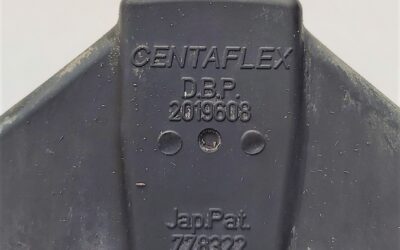
Read Article Read Article Discussion - Centaflex-D.B.P-2019608-JAP.Pat-778322 Centaflex-D.B.P-2019608-JAP.Pat-778322...
Explore practical CENTAFLEX coupling guides created for maintenance teams, engineers, machine owners and spare-parts buyers. This technical knowledge section explains how to identify CENTAFLEX A, H, K and X couplings, interpret product markings, recognise wear and select the correct original replacement components.
CENTAFLEX is not one single interchangeable coupling design. The product family includes coupling series with different elastomer materials, mounting arrangements, torsional characteristics and intended applications. Two elements may appear similar while differing in size, hardness, fitment, hub design or operating behaviour.
The articles in this category focus on practical identification, inspection and replacement questions. Use them to collect the correct information before ordering and to understand why the complete coupling specification matters.
Correct identification usually begins with the markings visible on the installed coupling. Depending on the series, useful information can include the coupling size, design type, Shore hardness, flange dimensions, hub specification and complete product code.
When the original markings are incomplete or damaged, identification may require measurements, photographs and information about the connected engine, hydraulic pump, gearbox, generator or other driven equipment.
Before requesting a replacement, collect:
A visual match alone is not sufficient. The available code, dimensions and drivetrain configuration should be considered together before selecting a replacement.
CENTAFLEX A coupling guides cover the identification and selection of highly flexible rubber coupling elements used for torsional vibration damping and reliable torque transmission.
Important CENTAFLEX A identification details include the coupling size, Type 0 or Type 0-S mounting execution and the original Shore hardness.
Start with the CENTAFLEX A coupling identification guide to understand which markings should be located on the existing element.
Additional CENTAFLEX A topics include:
Browse the available original CENTAFLEX A coupling elements by size, mounting type and specification.
CENTAFLEX H coupling guides explain how to identify the installed element, inspect its inserts and determine which components may require replacement.
CENTAFLEX H couplings are used in demanding diesel-hydraulic drive systems. Depending on the installed configuration and component condition, it may be possible to replace the coupling element alone, while damaged or worn inserts may also require replacement.
Use the CENTAFLEX H coupling identification guide to locate the element code and understand which photographs and dimensions can help confirm the correct replacement.
During inspection, check:
Browse original CENTAFLEX H coupling elements and inserts by product code and specification.
CENTAFLEX K couplings provide a compact, torsionally stiff connection commonly used between diesel engines and hydraulic pumps or splitter gears.
Identification can involve the complete flange marking, outside dimensions, SAE flywheel connection, hub design, number of metal jaws and shaft or spline dimensions.
Read the CENTAFLEX K coupling identification guide before selecting a flange or matching hub.
Important CENTAFLEX K identification points include:
The coupling flange and hub must match each other as well as both sides of the drivetrain. Identifying the flange alone does not automatically confirm the correct hub.
Browse the available original CENTAFLEX K flanges, elements and matching components.
CENTAFLEX X coupling guides cover the identification of low-weight, low-inertia coupling elements used in compact and higher-speed drivetrain applications.
The coupling size is normally marked directly on the element. However, photographs, dimensions and information about the complete mounting arrangement may still be required to confirm the correct execution.
Use the CENTAFLEX X coupling identification guide to understand which details should be supplied when the existing component cannot be identified from its marking alone.
Check:
Browse original CENTAFLEX X coupling elements by size and configuration.
The coupling series name alone does not provide enough information for replacement selection. The exact size, design, mounting arrangement and connected drivetrain components must also be confirmed.
Before ordering, verify:
The machine model can help narrow the search, but machines from the same product family may use different engines, pumps, flywheels or coupling executions.
Original CENTAFLEX components are manufactured for the dimensions, mounting geometry and operating characteristics of the corresponding coupling system.
An unverified replacement can resemble the original element while differing in material quality, Shore hardness, dimensional accuracy, insert arrangement or production traceability.
These differences may affect fitment, vibration damping, torsional stiffness and the long-term behaviour of the complete drivetrain.
When inspecting an element, look for:
A logo, patent reference or similar external appearance alone does not confirm the correct coupling size or execution.
Inspect the coupling when the machine develops unusual vibration, increased drivetrain noise, irregular torque transmission or visible movement within the assembly.
Common signs of wear include:
The reason for premature wear should be investigated before fitting a replacement. Repeated failure may be related to damaged hubs, loose mountings, incorrect alignment, unsuitable hardness or another drivetrain problem.
Do not inspect only the visibly damaged element. The complete coupling assembly should be checked, including hubs, inserts, flanges, pins, bolts, fasteners and connected machine mountings.
A new element can fail prematurely when installed with worn hubs, damaged inserts, excessive clearance or misaligned drivetrain components.
Installation methods, tightening values and alignment requirements should follow the appropriate technical documentation for the specific coupling series and machine application.
Technical documentation can help confirm available sizes, dimensions, mounting designs, torque ratings, maximum speeds and installation requirements.
Available AWELASTIC technical resources include:
Technical data should be reviewed together with the original machine specification. Selecting a coupling only by outside diameter or a general torque value may overlook important mounting and drivetrain requirements.
Browse the complete CENTA and CENTAFLEX coupling catalogue to compare available coupling elements, flanges, hubs and related replacement components.
Individual product pages provide available product markings, sizes, specifications, photographs, stock information and delivery options.
If the installed coupling cannot be identified, send AWELASTIC all visible markings, machine information, measurements and clear photographs of the existing component.
The articles in this category provide step-by-step CENTAFLEX identification help, series comparisons, original-part guidance, wear inspection advice and practical information for selecting the correct replacement coupling.
Read Article Read Article Discussion - Centaflex-D.B.P-2019608-JAP.Pat-778322 Centaflex-D.B.P-2019608-JAP.Pat-778322...

Read ArticleRead ArticleDiscussion - AWELTA Wind – Centaflex couplings Wind energy is one of the fastest-growing...
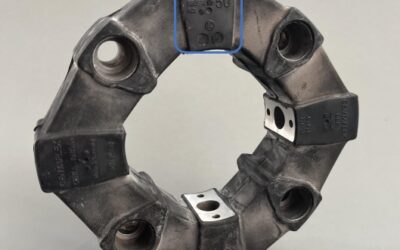
Read ArticleRead ArticleDiscussion - Centaflex A couplings are relatively straightforward to identify. The main...