
Read ArticleRead ArticleDiscussion - CENTAMAX couplings are manufactured in several fitment types to suit different...
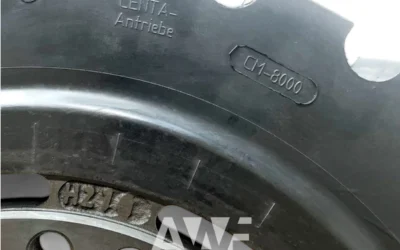
Explore practical CENTAMAX coupling guides for engineers, maintenance teams, vessel operators, generator specialists, machinery owners and spare-parts buyers. This technical knowledge section explains how to identify an installed CENTAMAX coupling, understand its product code, compare mounting types, verify Shore hardness and select the correct original replacement element.
CENTAMAX is a family of torsionally flexible coupling systems used in drivetrains where vibration control, reliable torque transmission and accurate matching of the coupling element are essential. Individual components can differ by nominal size, mounting type, Shore hardness, elastomer material, hub design and complete drivetrain specification.
The articles in this category focus on practical identification, inspection and replacement questions. Use them to collect the correct information before ordering and to avoid selecting a visually similar but technically incompatible component.
Correct identification should begin with the complete description or drawing number from the machinery documentation. When this information is unavailable, the existing coupling element can be inspected visually.
Start with the CENTAMAX coupling identification guide to understand which markings, dimensions and photographs should be collected.
Inspect the complete circumference and both sides of the element. Important information can include:
Copy the complete marking exactly as it appears on the component. Do not omit letters, hyphens, leading zeroes or the Shore hardness value, because every part of the designation can be relevant to the replacement.
Before requesting a CENTAMAX coupling element, collect as much information as possible from the existing component and the complete drivetrain.
Please provide:
The original part code or drawing number should be used as the primary identification reference whenever it is available. Dimensions, equipment information and photographs should provide additional confirmation.
A CENTAMAX description normally combines the coupling family, nominal size, mounting type, elastomer material and Shore hardness specification.
Product descriptions can include information such as:
A partial product description is not sufficient when several variants exist within the same nominal size. Always compare the complete designation with the existing component and technical documentation.
CENTAMAX coupling elements are produced with different mounting arrangements. The type designation is an essential part of the product code and must be verified before ordering.
Read the full CENTAMAX SB, SBE, SC and SCE comparison for photographs and a detailed explanation of the different mounting methods.
The nominal coupling size alone does not determine the correct type. Elements with the same size can use different fastening arrangements and should not automatically be treated as interchangeable.
Type SB is a flange-mounted CENTAMAX execution used in selected generator, marine auxiliary and industrial drive applications.
When identifying an SB element, verify:
Do not select an SB element only from its outside diameter. Different sizes, hardnesses and material versions can have significantly different operating characteristics.
Type SBE is a separate CENTAMAX mounting execution used in specific generator and industrial drivetrain configurations.
An SBE element should be identified from its complete code, fastening arrangement and technical documentation. The final letter must not be omitted when recording the designation.
Confirm whether the installed element uses plain holes, threaded mounting points or another application-specific connection before ordering.
Type SC is commonly found among larger CENTAMAX coupling elements. In this execution, the fastening bolts normally pass through plain, unthreaded holes in the elastomer element and connect with the matching hub or related component.
During identification, check:
An SC element should not automatically be replaced by an SCE element of the same nominal size because their fastening arrangements can differ.
Type SCE is used for selected large and heavy-duty CENTAMAX coupling sizes. Unlike a standard SC element, an SCE version incorporates threaded mounting holes in the element.
Depending on the size and execution, an SCE element can contain a combination of plain and threaded holes or a mounting arrangement consisting primarily of threaded points.
Before ordering, verify the exact quantity and position of every plain and threaded hole. Photographs of both sides of the element are especially important when the complete code is no longer readable.
Shore A hardness describes the stiffness of the elastomer element and influences the torsional behaviour of the complete drivetrain.
Read how Shore hardness affects CENTAMAX coupling performance before replacing an element when several hardness options are available.
In general, a softer element provides greater torsional flexibility and damping, while a harder element provides higher torsional stiffness. This does not mean that one option is automatically better than another. The correct hardness is the one specified for the original engine and driven-equipment combination.
Do not change the Shore hardness simply because another version is available in stock or has identical physical dimensions. A different hardness can change the vibration behaviour and natural frequencies of the drivetrain.
In engines, generators, marine propulsion systems and other vibration-sensitive drivetrains, the coupling specification may be selected as part of a torsional vibration analysis.
The calculation can consider:
For this reason, the replacement element should normally retain the originally specified size, type, material and Shore hardness. Any change should be supported by the relevant technical documentation or engineering approval.
CENTAMAX elements can be supplied in different elastomer materials according to the operating requirements of the application.
Existing elements may carry material descriptions such as NR or SI. Colour can provide an initial indication, but it should never replace verification of the complete marking.
Before selecting the material, confirm:
Do not substitute one elastomer material for another only because the element dimensions appear identical.
The nominal CENTAMAX size is normally shown on the coupling element or in the equipment documentation. However, size alone does not provide the full replacement specification.
Selection must also account for:
A physically larger or harder element should not be selected as an assumed upgrade. The replacement must correspond with the engineered drivetrain configuration.
Original components are produced to match the dimensions, mounting geometry and mechanical characteristics specified for the corresponding CENTAMAX system.
Read why original CENTAMAX parts should be selected instead of unverified aftermarket alternatives.
An alternative element can resemble the original component while differing in:
These differences become particularly important in marine propulsion, generator, rail and heavy industrial systems where the coupling forms part of the calculated drivetrain.
Large diesel generator sets and other high-output drive systems operate with significant torsional loads. In these applications, the coupling is not simply a dimensionally matching rubber component.
Read why OEM CENTAMAX coupling elements are important in large gensets.
Replacement selection should preserve the engineered coupling characteristics, including the nominal size, mounting execution, elastomer material, Shore hardness and hub connection.
CENTAMAX coupling systems are used in demanding power-transmission applications where torsional vibration and drivetrain reliability must be controlled.
Typical application areas include:
The application or equipment model can help narrow the search, but it does not replace the original coupling code. Similar machines may use different engines, hubs, Shore hardnesses or mounting types.
Inspect the coupling element when the machine develops unusual vibration, drivetrain noise, visible movement or changes in operating behaviour.
Possible signs of wear or damage include:
The cause of premature damage should be investigated before installing a new element. Repeated coupling failure can indicate damaged hubs, incorrect installation, unsuitable operating conditions or problems elsewhere in the drivetrain.
Do not inspect only the visibly damaged elastomer element. Check the entire coupling and connected drivetrain.
Inspect:
A new element can be damaged prematurely when it is fitted to worn, loose, incorrectly positioned or misaligned connection components.
Installation should follow the assembly instructions for the exact coupling size and mounting type.
Before installation:
Use the correct manufacturer documentation for tightening values, installation dimensions and inspection requirements.
Technical documentation can help confirm coupling dimensions, available types, hub connections, dynamic torsional stiffness, mounting details and installation procedures.
Visit the CENTAMAX catalogues, datasheets and assembly instructions page to review the available technical resources.
The catalogue and installation instructions should be used together with the original machine or vessel documentation. Selecting an element only by outside diameter or nominal torque can overlook important mounting and torsional requirements.
Browse the complete range of original CENTAMAX coupling elements by nominal size, mounting type, elastomer material and Shore hardness.
Open the relevant product page and compare the complete product description with the code on the existing component. Check every part of the designation before ordering.
The product category is intended for browsing and purchasing actual coupling elements, while this post category provides identification, inspection and technical guidance.
Use the articles in this category to learn more about:
If the required coupling element cannot be identified, send AWELASTIC the complete visible marking, measurements, Shore hardness, equipment details and clear photographs.
The articles in this post category provide practical help with CENTAMAX identification, SB, SBE, SC and SCE type comparison, Shore hardness, original-part verification, wear inspection and replacement selection.
Read ArticleRead ArticleDiscussion - CENTAMAX couplings are manufactured in several fitment types to suit different...
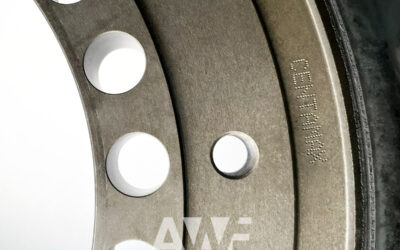
Read ArticleRead ArticleDiscussion - In high-output marine generators, gas power units, locomotives, and heavy...
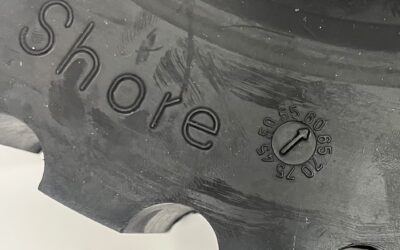
Read ArticleRead ArticleDiscussion - Shore hardness is a key factor in determining the performance of elastomeric...